
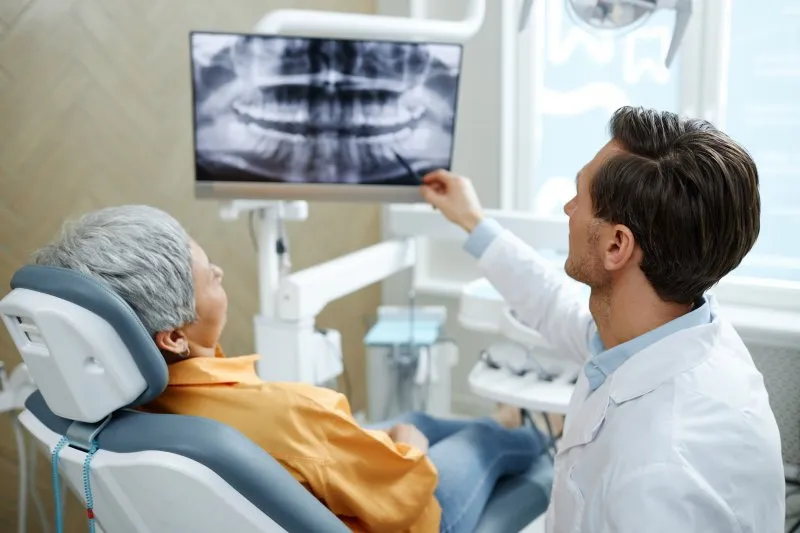
What Is an Oral Cancer Screening?
If you’ve ever wondered what happens during an oral cancer screening, the answer is refreshingly simple. It’s a quick visual and physical exam of your mouth, tongue, throat, and neck. Your dentist or hygienist checks for early signs of cancerous or precancerous lesions. The exam takes only a few minutes and is typically included as part of your routine dental checkup at Premier Dental.
Oral cancer screenings are one of the simplest, most valuable preventive steps in modern dentistry. Because oral cancer often develops without obvious symptoms in its earliest stages, a trained clinician’s eye can spot subtle changes long before you would notice anything unusual at home. Finding a suspicious spot, sore, or patch of tissue early can make a meaningful difference in treatment outcomes.
At Premier Dental, our board-certified prosthodontists Dr. Adam Jones, DMD, MS and Dr. Giuliana Diaz Jones, DDS, along with our clinical team, include oral cancer screenings in every routine visit. Both doctors trained at the University of Florida College of Dentistry and bring advanced clinical expertise to every exam, whether it’s a preventive check or a detailed evaluation of your oral health.
Here’s what makes the screening so patient-friendly:
- Quick: Usually completed in about five minutes.
- Comfortable: No needles, drills, or discomfort involved.
- Non-invasive: Nothing is cut, removed, or sampled during the initial screening.
- Included: Typically bundled with your regular exam and cleaning.
Who performs the screening depends on your practice. In many offices, a dental hygienist begins the visual inspection, and the dentist confirms findings. At Premier Dental, your doctor personally evaluates the tissues in and around your mouth, giving you the concierge-level customer service and personalized attention our patients have come to expect.
The goal is simple: find anything unusual as early as possible, when it’s most treatable.
How an Oral Cancer Screening Works: Step by Step
Understanding what happens during an oral cancer screening starts with knowing the sequence. The exam follows a clear, five-step process. First comes a review of your medical history. Next is a visual inspection of oral tissues. Then your provider performs a physical palpation of your jaw and neck. Some visits add optional adjunctive tools. Finally, you’ll discuss any findings together. The entire exam is comfortable, requires no special preparation, and usually takes about five minutes.
Here’s what you can expect at each stage of the screening at our dental office.
What Happens During the Medical History Review?
Your dentist will start by reviewing your medical history and asking about known risk factors for oral cancer, including:
- Tobacco use (cigarettes, cigars, pipes, chewing tobacco)
- Frequent or heavy alcohol consumption
- HPV exposure history
- Family history of head and neck cancers
- Prolonged sun exposure (linked to lip cancer)
This conversation helps your provider match the screening to your individual risk profile.
How Does the Visual Inspection Work?
Next, using a light and a small mirror, your provider visually examines the soft tissues inside and around your mouth. Areas checked include:
- Lips (inside and outside)
- Gums
- Tongue (top, sides, and underneath)
- Inner cheeks
- Roof and floor of the mouth
- Back of the throat and tonsils
The clinician is looking for red or white patches, sores that haven’t healed, unusual lumps, and changes in tissue texture or color.
What Is Physical Palpation During a Screening?
Applying gentle pressure with the fingertips, the dentist feels along your jawline, under your chin, and along the sides of your neck to check for lumps or enlarged lymph nodes. The inside of the mouth is also palpated to detect any hardened areas or thickened tissue beneath the surface.
When Are Adjunctive Screening Tools Used?
Some visits may include optional adjunctive technology, such as:
- Fluorescent light exams that highlight abnormal cell activity
- Dye rinses (like toluidine blue) that can stain suspicious tissue
- Tissue reflectance tools that make abnormalities easier to see
These aren’t always necessary but can be useful when a patient has elevated risk factors.
What Are the Findings and Next Steps?
Once the exam wraps up, your dentist will explain what they observed. If everything looks healthy, you’re done. If something needs a closer look, they may recommend monitoring the area for two weeks, ordering additional imaging, or referring you for a biopsy.
How Do You Prepare for a Screening?
No special preparation is needed. If you wear dentures or a partial, you’ll be asked to remove them so all tissue surfaces can be examined. Otherwise, just show up as you would for any routine visit.
What Are the Benefits of Regular Oral Cancer Screenings?
Regular oral cancer screenings improve early detection, catch precancerous lesions before they progress, make your risk factors actionable, and add real peace of mind. Best of all, most of these advantages come without any added cost or discomfort when the screening is included in your routine checkup.
Early detection improves outcomes. According to the American Cancer Society, oral cancers found in their earliest, localized stage have significantly higher five-year survival rates than those found after they’ve spread. A routine screening is one of the best chances your dentist has to catch a problem while it’s still small and highly treatable.
Precancerous lesions can be caught before they progress. Not every abnormality is cancer. Many are precancerous changes, like leukoplakia (white patches) or erythroplakia (red patches), that can be monitored or treated before they become malignant. Catching these changes early gives you options.
Quick, comfortable, and typically included in your visit. Because screenings are usually part of your routine exam, there’s no separate appointment to schedule, no needles, and no recovery time. It’s the kind of preventive care that gives you a lot of protection without asking much of you in return.
Risk factors become actionable. During the screening conversation, your dentist may identify lifestyle habits that increase your oral cancer risk. Knowing this gives you the chance to make informed choices, whether that’s quitting tobacco, moderating alcohol, or scheduling more frequent evaluations.
Peace of mind. For many patients, the reassurance of a professional evaluation is worth the few minutes it takes. Knowing an expert has looked closely at your oral tissues, and found nothing concerning, is a genuine benefit in itself.
Why Does Early Detection Matter So Much?
The earlier a suspicious change is found, the smaller and more treatable it usually is. A lesion caught during a routine screening can often be addressed with far simpler treatment than one discovered after it has grown or spread. That difference in timing is exactly why so many clinicians consider the screening the single most valuable minute of a preventive visit.
How Do Screenings Support Your Long-Term Health?
Regular evaluations create a baseline record of your oral tissues over time, so your provider can spot even small deviations at future visits. At Premier Dental, we do not judge. We do not lecture. If risk factors come up, we work with you to understand your health picture and support smart, sustainable changes when you’re ready.
Oral Cancer Screening vs. Biopsy and Diagnostic Testing
Understanding the difference between a screening and a diagnostic test helps set the right expectations. A screening is a check for possible warning signs. A biopsy or advanced diagnostic test is what confirms whether something is actually cancerous.
Here’s a side-by-side comparison:
| Feature | Oral Cancer Screening | Biopsy / Diagnostic Testing |
|---|---|---|
| Purpose | Preliminary check for warning signs | Confirms or rules out a diagnosis |
| Method | Visual exam and physical palpation | Tissue sample sent to a lab |
| Discomfort | Comfortable, non-invasive | May involve local anesthetic |
| When Performed | Routine dental visits (typically yearly) | Only when a suspicious area is identified |
| Result | “Healthy” or “needs further evaluation” | Definitive diagnosis |
| Performed By | Dentist or hygienist | Oral surgeon, ENT, or pathologist |
A screening tells your dentist whether something looks or feels unusual. It does not, on its own, diagnose cancer. If your provider spots a suspicious area, they may recommend one of the following next steps:
- Watchful waiting: If the area could be from a minor irritation (like a cheek bite or denture rub), your dentist may ask you to return in two weeks to see if it has healed.
- Adjunctive imaging: Specialized lights or dyes can offer a closer look at tissue changes.
- Referral for biopsy: A small tissue sample is taken and analyzed in a laboratory to determine whether abnormal cells are present.
Keep in mind that most abnormal findings are not cancer. Canker sores, irritation from dental appliances, and benign growths are all far more common than malignancies. A recommended biopsy is a precaution, not a diagnosis.
How Much Does an Oral Cancer Screening Cost?
Most oral cancer screenings are bundled into the cost of a routine dental exam, meaning there’s no separate fee for the visual and physical evaluation. Standalone or advanced screenings using adjunctive technology may involve an additional charge. Insurance coverage varies, and your out-of-pocket cost will depend on your specific plan and provider.
Here’s what typically influences the cost of a screening:
- Bundled with routine exams: The standard visual and palpation screening is almost always included as part of your regular checkup pricing, so you won’t see a separate line item.
- Adjunctive technology: If your provider uses specialized tools like fluorescent light exams or dye rinses, there may be a modest additional fee for those services.
- Standalone screenings: If you request a screening outside of a routine visit, expect a small examination fee.
- Insurance coverage: Many dental plans cover oral cancer screenings as part of preventive care, but coverage for adjunctive tools varies widely.
- Payment options: If your plan doesn’t fully cover a service, our in-house dental savings plan and flexible financing through CareCredit make preventive care accessible for our patients.
If you want a clear picture of what your visit will cost before you arrive, our team at Premier Dental is happy to walk you through what’s included in your exam. Just contact our dental office and we’ll confirm coverage and any potential out-of-pocket expenses.
Who Should Get an Oral Cancer Screening?
Nearly every adult should have an oral cancer screening at least once a year, and higher-risk patients may benefit from more frequent evaluations. The American Dental Association recommends that all adults receive regular screenings as part of routine dental care.
You may be a good candidate for annual (or more frequent) screenings if any of the following apply:
- Adults 18 or older should be screened, with particular attention paid after age 40, when incidence begins to climb.
- Tobacco use in any form raises your risk, including cigarettes, cigars, pipes, or smokeless tobacco.
- Heavy or frequent alcohol consumption is a concern, and combined tobacco and alcohol use significantly raises risk.
- A history of HPV exposure matters, since certain strains of HPV are linked to oropharyngeal cancers.
- You have a personal or family history of head and neck cancers.
- Significant time in the sun without lip protection raises the risk of lip cancer, an especially relevant concern for those who spend long hours outdoors.
- You’ve noticed a warning sign, such as a sore that won’t heal, a persistent lump, unexplained bleeding, difficulty swallowing, or a red or white patch that has lasted more than two weeks.
How Often Should You Be Screened?
For most healthy adults, once a year during your routine dental exam is enough. Patients with elevated risk factors, especially long-term tobacco users, heavy drinkers, or those with a personal history of oral lesions, may need screenings every six months or as recommended by their dentist.
If you’ve been putting off your dental care because you feel embarrassed about the state of your smile, please know that it’s never too late for your smile, and we do not judge. We do not lecture. Our team’s goal is simply to help you get back on track with your oral health with the personalized attention you deserve.
Frequently Asked Questions
Can a dentist tell if you have oral cancer?
A dentist can identify signs that suggest oral cancer might be present, but the screening itself is not a diagnosis. If your dentist finds something suspicious, they’ll typically recommend a biopsy or referral to confirm whether abnormal cells are actually cancerous. Most suspicious findings turn out to be benign, but a professional evaluation is the essential first step.
How long does an oral cancer screening take?
A standard oral cancer screening takes about five minutes and is completed during your routine dental exam. If your provider uses adjunctive tools like a fluorescent light or dye rinse, the exam may take a few minutes longer. Either way, it’s a short, comfortable addition to your regular visit.
Does an oral cancer screening hurt?
No, an oral cancer screening does not hurt. The exam involves your dentist visually inspecting your mouth and gently feeling around your jaw and neck for lumps. There are no needles, drills, or invasive instruments involved. Most patients don’t even realize the screening is happening until it’s over.
How often should I get screened for oral cancer?
Most adults should have an oral cancer screening once a year as part of their routine dental exam. Patients with higher risk factors, such as tobacco use, heavy alcohol consumption, or a history of oral lesions, may need screenings every six months. Your dentist will recommend the right schedule based on your health history.
What are the early warning signs of oral cancer?
Common early warning signs include a sore in the mouth that doesn’t heal within two weeks, a persistent red or white patch, unexplained lumps or thickened tissue, difficulty swallowing or chewing, a chronic sore throat, and numbness in the tongue or lips. If you notice any of these symptoms, schedule an evaluation promptly. Early attention gives you the widest range of treatment options and the best chance at a straightforward outcome.
How do I prepare for an oral cancer screening?
No special preparation is needed. You can eat, drink, and brush your teeth as you normally would. If you wear dentures, a partial, or a retainer, your dentist will ask you to remove it during the exam so all soft tissue surfaces can be examined thoroughly. When you’re due for a checkup, or if you’ve noticed something unusual, you can request an appointment with our team, who provide thorough screenings as part of every routine exam with concierge-level customer service.